Zhangjiajie
China, Asia
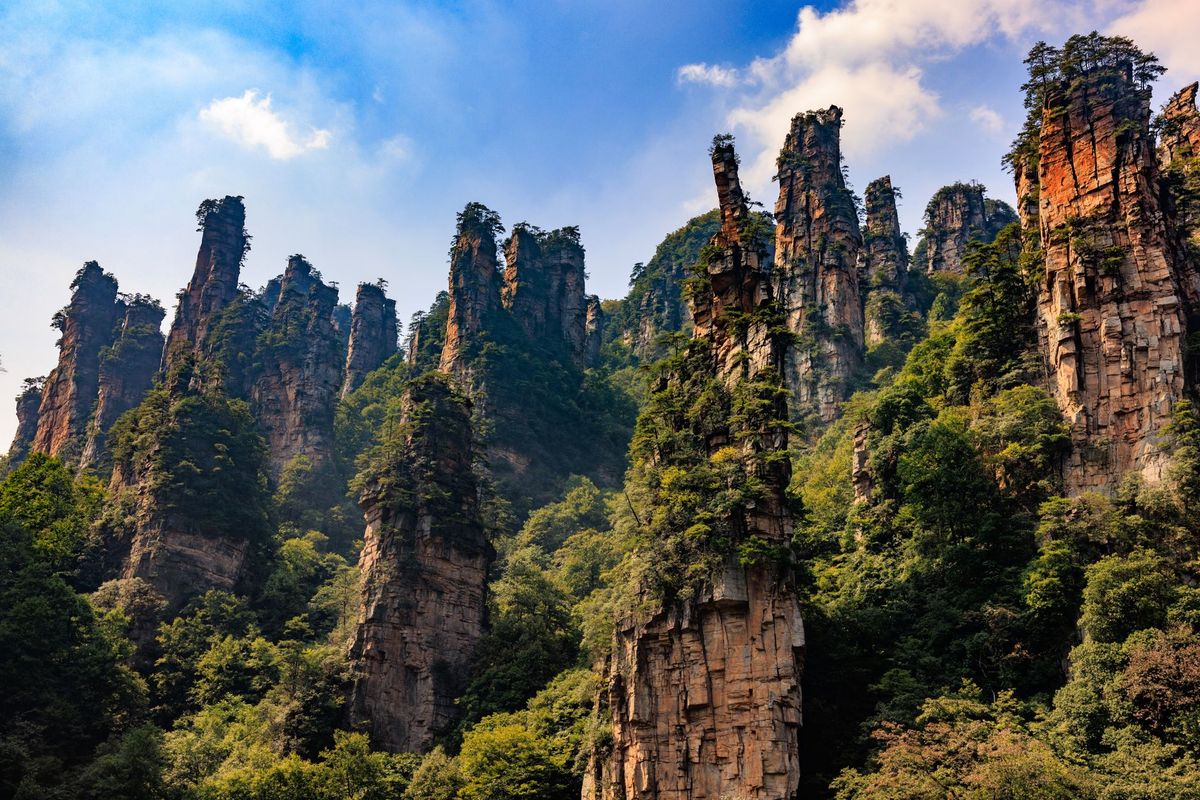
Pillars in cloud. The landscape that shouldn't exist but does.
The pillars rise out of cloud so thick you can't see the ground below them. Hundreds of sandstone columns, some over 200 metres tall, wrapped in sub-tropical green and half-dissolved in mist. Zhangjiajie is what happens when a landscape looks genuinely implausible. The Avatar comparison is inevitable and accurate and slightly annoying, but it doesn't stop you from staring.
Our honest take
The scenery is genuinely like nothing else on Earth. But crowds are intense on Chinese national holidays and summer weekends, the park infrastructure is a constant queue, and the glass bridge experience is more theme park than wilderness. Come mid-week in shoulder season or you'll spend more time waiting than walking.
Why go
- Yuanjiajie plateau at dawn, when cloud fills the valleys below the pillars and the first light hits the canopy: this is what every photo was trying to show you
- The Golden Whip Stream trail follows a river through the base of the columns for 7km. Flat, forested, far fewer people than the summit viewpoints
- Tianmen Mountain's cliff-face road has 99 hairpin turns and ends at a natural arch carved into the peak, accessible by the world's longest cable car
Skip if you can
- The Grand Canyon Glass Bridge during Chinese national holidays: 4-hour queues, no photography allowed inside, the canyon view is secondary to the gimmick
- Wulingyuan village restaurants on the main drag: tourist pricing for mediocre food. Walk two streets back for local rice dishes at a third of the cost
- Rushing the park in a single day. The mandatory shuttle buses between zones eat time and a one-day push means seeing nothing properly
Things to do
Where locals eat
Zhangjiajie's signature Tujia dish: a dry hotpot of preserved pork, radish, and tofu (or offal), cooked down spicy and served in a pot over a flame. Widely called the most representative dish of the region.
A Tujia restaurant in Zhangjiajie city (cheaper than the scenic-area eateries), such as Xiang Li Ren Jia
Smoke-cured pork belly, a staple of the Tujia people, stir-fried with chillies and dried vegetables. Salty, smoky, and very local.
A Tujia home-style restaurant
A breakfast bowl of rice noodles in a spicy broth with pickles and chilli oil, the everyday start to the day in this part of Hunan.
A morning noodle shop in Zhangjiajie city
Foraged mountain vegetables and bamboo shoots feature heavily in local cooking around the national forest park.
A restaurant inside or near Wulingyuan
Costs
Per person, per day on the ground, lodging, food, local transport and activities. Excludes international flights (see Getting there).
Park entry (2-day pass): 248 CNY ($34). Bailong Elevator: 72 CNY ($10). Guesthouse room: 150-300 CNY ($21-42). Sit-down meal: 40-80 CNY ($6-11).
Getting there
Where to stay
Walking distance to north gate, budget guesthouses and mid-range hotels, noisy at night
45 minutes from park by bus, wider choice of restaurants and transport links, less touristy
Premium lodges inside the forest, early morning access before day visitors arrive, very expensive for China
Good to know
- Paths get extremely slippery when wet. Rain is frequent, especially May-June. Pack proper footwear, not sandals.
- Google Maps does not work in China. Download Maps.me or Amap (Gaode) before arrival and store offline maps.
- WeChat Pay and Alipay are required for most payments. Overseas cards are rarely accepted. Set up a payment method before entering the park area.
- Altitude on the plateau is modest but the steps are relentless. The climb to Tianmen Cave involves 999 steps. Judge accordingly.
Prices, visa rules, and transport details may change. Always verify with official sources before booking. Last updated: July 2026.
Reviews
No reviews yet
Visited Zhangjiajie? Be the first to share your experience.