Easter Island
Chile, South America
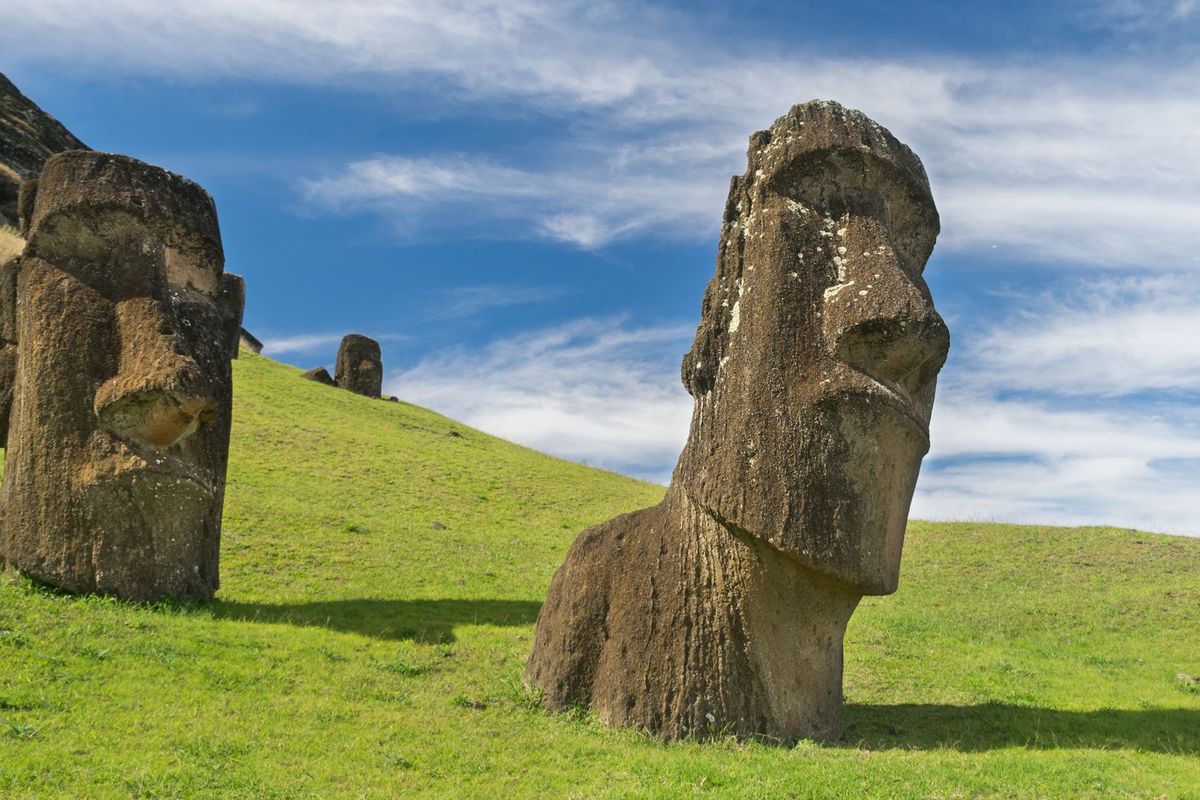
Stone giants on a rock in the middle of nowhere.
The moai stare inland, not at you. That detail takes a moment to register when you're standing at Ahu Tongariki at sunrise, fifteen stone figures with their backs to the Pacific. The island is small enough to drive in an hour, windy almost always, and the grass is a particular shade of green that only exists where the ocean is 2,000km in every direction.
Our honest take
Getting here is expensive and the island has almost no budget options. Once you're here though, the remoteness is the point. Four days is enough. Most moai can be seen in two serious days of driving. The third day is for the beach and the fourth is for staring at the ocean wondering how anyone found this place.
Why go
- Ahu Tongariki at sunrise: fifteen moai lit orange with the crater lake behind you and zero other tourists if you arrive before 7am
- Rano Raraku, the quarry where hundreds of unfinished moai still sit half-carved into the hillside, gives more context than any finished site
- The water clarity for snorkeling off Anakena is extraordinary, and the beach has the only palm trees on the island
Skip if you can
- The guided group bus tours from Hanga Roa: they rush you past sites in forty minutes and you spend half the day waiting for people to finish their souvenir shopping
- Eating at the hotel restaurant every night. Hanga Roa has a handful of small local spots serving fresh tuna ceviche and empanadas for a fraction of the price
- Skipping Orongo. Most people run out of time, but the ceremonial village on the crater rim with ocean views on three sides is worth two hours of anyone's itinerary
Things to do
Where locals eat
Tuna caught that morning, as ceviche, or grilled over hot volcanic stones (tunu ahi) in the traditional Rapa Nui way. The island's Polynesian roots on a plate.
Te Moana or Haka Honu on the Hanga Roa coast, both serving Rapa Nui and Polynesian seafood
Surrounded by the Pacific, the island eats excellent raw and grilled tuna, ceviche here often uses local citrus and is a reliable, fresh order.
A seafood restaurant in Hanga Roa
A Polynesian earth oven, fish, meat, and sweet potato cooked underground with hot stones, sometimes served at cultural dinners. A genuine Rapa Nui tradition.
A cultural dinner or traditional restaurant on the island
A baked pudding of mashed banana or pumpkin with flour, the island's Polynesian-style dessert.
A local restaurant in Hanga Roa
Costs
Per person, per day on the ground, lodging, food, local transport and activities. Excludes international flights (see Getting there).
National park entry (Rapa Nui National Park, covers most moai sites): 54,000 CLP (~$54 USD) for non-residents. Lunch at a local spot: 10,000-15,000 CLP ($10-15). Car rental: 60,000-90,000 CLP/day ($60-90). Flights from Santiago: 200,000-600,000 CLP (~$200-600) each way depending on season.
Getting there
Where to stay
The only town, restaurants and dive shops walkable, basic guesthouses to mid-range hotels
Small lodges with ocean views, quieter, five-minute walk to town
One or two guesthouses near the beach, isolated, beautiful at dusk, you need a car
Good to know
- Sun exposure is severe year-round. The treeless interior gives no shade; bring serious sunscreen and a hat for any daytime site visit.
- Do not touch or climb on any moai or ahu platforms. Fines are enforced and the damage is irreversible.
- The island has limited medical facilities. Travel insurance with evacuation cover is essential.
- Petty theft is rare but increasing. Lock rental vehicles and do not leave bags visible.
Prices, visa rules, and transport details may change. Always verify with official sources before booking. Last updated: July 2026.
Reviews
No reviews yet
Visited Easter Island? Be the first to share your experience.