Valletta
Malta, Europe
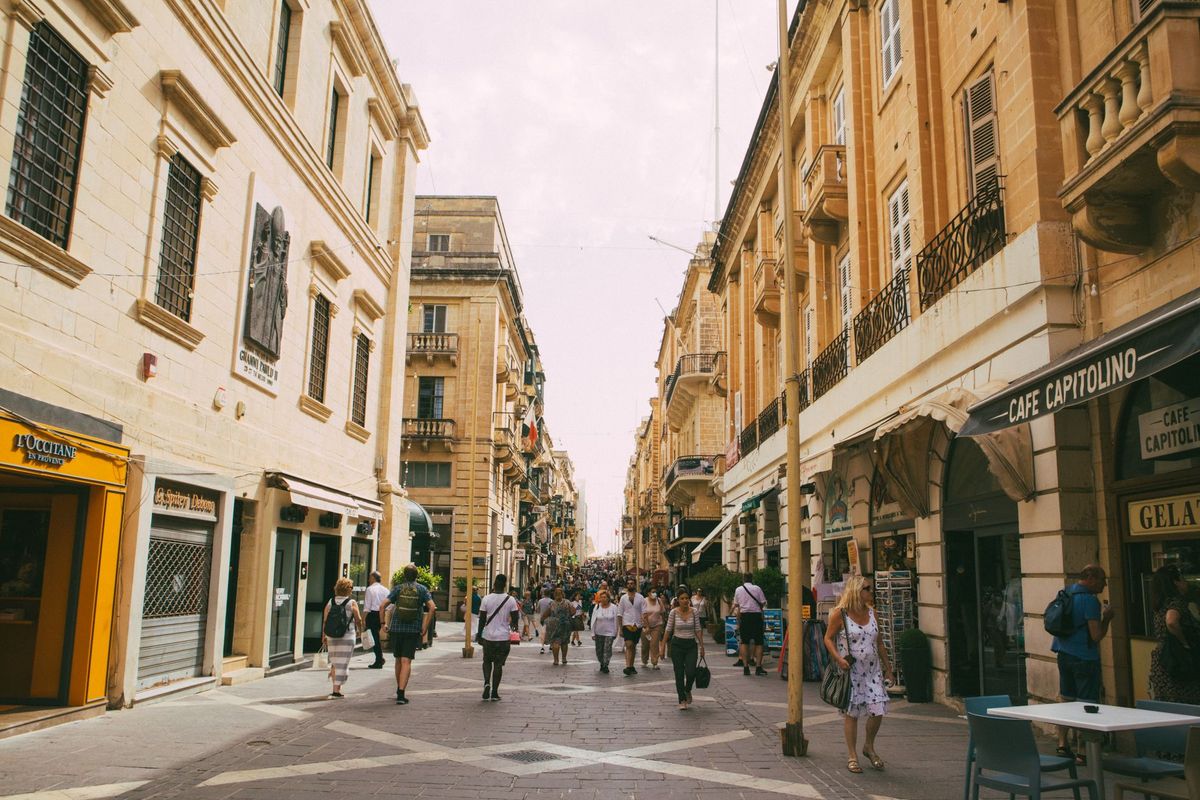
A crusader city the size of a village, carved from honey-coloured stone.
The streets are so steep and narrow that a parked car and a balcony above it nearly form a tunnel. Valletta is one of Europe's smallest capitals, twenty-three streets wide, built entirely by crusader knights in the sixteenth century and showing its age in the best possible way. Limestone facades the colour of dry honey, baroque churches that swallow entire city blocks, and a harbour so photogenic it looks like it was designed for the postcard first.
Our honest take
Valletta punches above its size on history and atmosphere but struggles with tourist saturation on the main drag, Republic Street. Two full days covers it well, more if you want day trips to Mdina or Gozo. Summers are brutally hot and the cruise crowds turn the centre into a bottleneck by 10am.
Why go
- St. John's Co-Cathedral looks like a plain limestone box from outside, inside, every inch of floor, wall, and ceiling is gilded, carved, or painted, including two Caravaggio originals hanging in a side chapel
- The Three Cities ferry from the Grand Harbour quay costs €2.50 ($2.75) and deposits you in Vittoriosa, where cats outnumber tourists and fishing boats knock against the walls of a fort that predates Valletta itself
- Upper Barrakka Gardens at noon when the cannon fires across the Grand Harbour, a daily ritual since 1566, and the view across to the Three Cities is the best in Malta
Skip if you can
- Republic Street restaurants at lunchtime, overpriced, mediocre pasta aimed squarely at cruise-day visitors; walk one block parallel to Merchant Street instead
- Trying to book the Hypogeum of Ħal Saflieni last minute, tickets sell out weeks ahead and entry is capped at 80 people a day; book online before you fly
- Renting a car in Valletta, the city is tiny, parking is a nightmare, and buses to the rest of the island are cheap and reasonably reliable
Things to do
Where locals eat
Flaky diamond-shaped pastry filled with ricotta or mushy peas. Malta 70-cent street food
Crystal Palace in Rabat (open since forever, served through a window) or Is-Serkin in Valletta on St Lucia St
Maltese flatbread topped with tomato paste, capers, olives, and tuna, the local pizza alternative
Nenu the Artisan Baker on St Dominic St in Valletta or any village bakery (forn) in Gozo
Beef olives, thin beef rolled around a filling of breadcrumbs, bacon, egg, and parsley, braised in red wine
Ta Kris in Sliema (home-style Maltese) or Rubino in Valletta (old-school, reservations recommended)
Deep-fried date pastry diamonds served with ice cream, the Maltese dessert you eat walking
Fontanella Tea Garden in Mdina (with a view) or any village festa food stall in summer
Costs
Per person, per day on the ground, lodging, food, local transport and activities. Excludes international flights (see Getting there).
St. John's Co-Cathedral: €15 ($16.50). Hypogeum: €35 ($38.50). Ftira sandwich at a local bakery: €2-3 ($2.20-3.30). Dinner in Valletta: €25-45/person ($27-50).
Getting there
Where to stay
Walk everywhere, atmospheric, can be noisy on weekends when bars close late
10-minute ferry to Valletta, more hotels and restaurants, better value, less historic character
Quieter, local, beautiful harbour views, requires a short ferry or Bolt to Valletta
Good to know
- Malta is generally very safe, petty theft around the Valletta waterbus terminal is the main concern
- Summer heat is serious: June to August regularly hits 35°C+ with no shade on the bastions, carry water and a hat
- The steep, stepped side streets are uneven limestone, poor footwear will end your day early
- Swimming from Valletta itself isn't possible; the nearest beaches are in St. Julian's or St. George's Bay by bus
Prices, visa rules, and transport details may change. Always verify with official sources before booking. Last updated: July 2026.