Jaipur
India, Asia
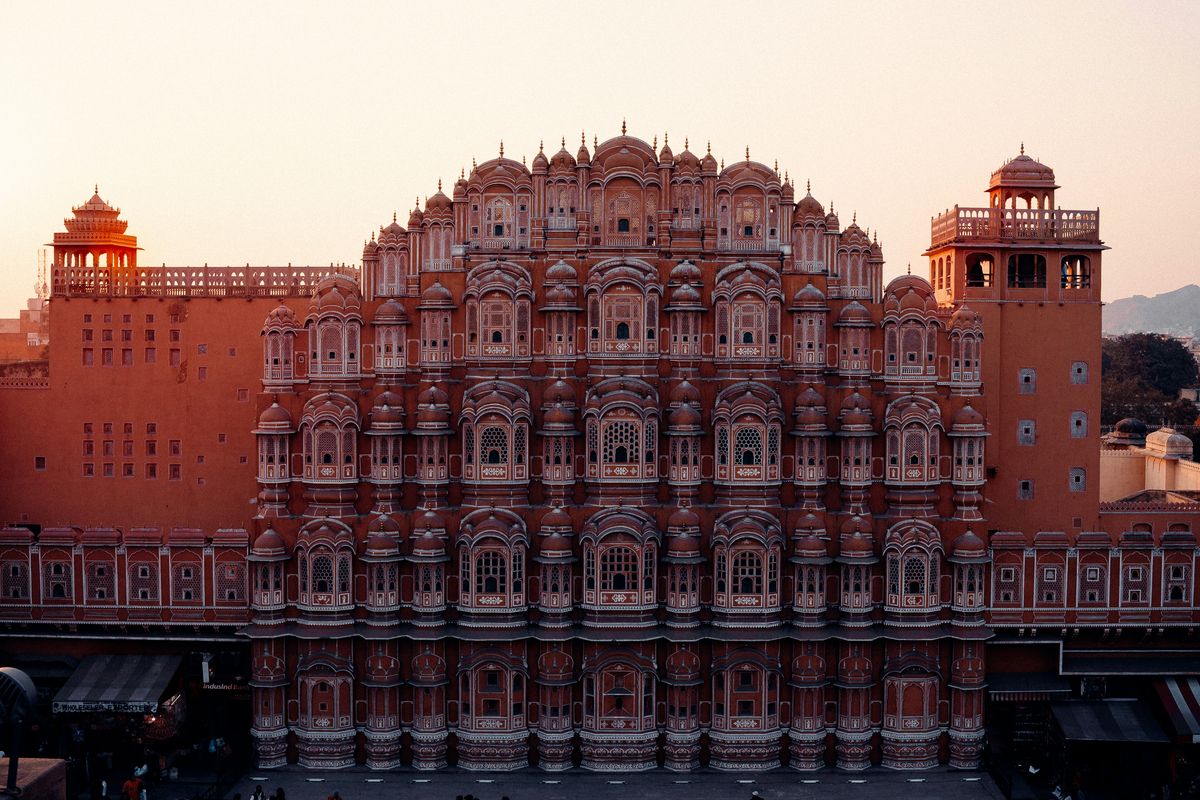
A pink-walled city that runs on chai, chaos, and centuries of swagger.
The walls really are pink, a warm terracotta that deepens at dusk until the whole old city glows like an ember. Auto-rickshaws horn their way past camel carts on roads that predate traffic lights, and somewhere inside the bazaars of Johari Bazar, a tailor is threading a needle while negotiating a price without looking up. The palaces are enormous, the crowds are real, and the chai is non-negotiable.
Our honest take
Jaipur is overwhelming in the best and worst sense. The forts are genuinely grand, the bazaars are rich and exhausting, and persistent touts outside every major monument will test your patience. The fix: hire a good local guide for day one, learn the fixed-price shops, and give yourself mornings before the heat and tour buses arrive.
Why go
- Amber Fort at 7am, before the tour groups, when the light hits the Maota Lake and the walls turn gold and the only sound is pigeons
- Johari Bazar and Bapu Bazar sell block-print textiles, silver jewellery, and blue pottery at prices you won't find in Delhi, knowing what you want before you walk in helps
- Jantar Mantar is a 300-year-old working observatory, nineteen stone instruments that calculated celestial positions before telescopes existed, and most visitors walk past without understanding what they're looking at
Skip if you can
- Elephant rides at Amber Fort, the animals are overworked on steep stone; the elephant conservation centre on the outskirts offers an ethical alternative
- Nahargarh Fort's rooftop restaurant, the view is fine but the food is expensive and mediocre, and locals don't eat there
- Gems and carpet shops that drivers 'recommend', commission tours dressed as cultural experiences; drivers get a cut and prices are inflated by 300%
Things to do
Where locals eat
Hard wheat rolls baked in coals, cracked open and drenched in ghee, served with lentil dal and sweet crumbled wheat
Chokhi Dhani (touristy but authentic Rajasthani feast) or Laxmi Mishthan Bhandar (LMB) on Johari Bazaar
Deep-fried onion-stuffed pastry served with tamarind and green chutney, breakfast or anytime snack
Rawat Mishthan Bhandar on Station Road (queue for the fresh batch, worth it)
Fiery red mutton curry made with dried Mathania chillies. Rajasthan's signature non-veg dish
Handi Restaurant near Hawa Mahal or Niros on MI Road for the air-conditioned version
Dense frozen milk dessert with rose syrup, vermicelli, and basil seeds, the Indian ice cream that isn't
Pandit Pav Bhaji near New Gate or any kulfi cart in Bapu Bazaar after 7pm
Costs
Per person, per day on the ground, lodging, food, local transport and activities. Excludes international flights (see Getting there).
Amber Fort entry: 500 INR ($6) for foreigners. Composite ticket for 6 sites: 1000 INR ($12). Thali meal: 150-300 INR ($2-3.50). Auto-rickshaw across old city: 50-100 INR ($0.60-1.20).
Getting there
Where to stay
Inside the walled city, noisy, atmospheric, close to every major sight, guesthouses in old havelis
Colonial-era residential neighbourhood, quieter, heritage hotels, 10 min from old city
Modern Jaipur, upscale hotels, good restaurants, less character but more comfort
Good to know
- Drink only bottled or filtered water, ice in local restaurants is often tap water
- Heat between April and September can exceed 42°C, carry water, wear a hat, plan monuments before 10am
- Gem scams are common, anyone claiming to offer a 'special export price' for resale back home is lying
- Solo women travellers: old city staring is persistent but mostly non-threatening, sarongs over shoulders help, evenings in busy areas are fine
Prices, visa rules, and transport details may change. Always verify with official sources before booking. Last updated: July 2026.