Antigua Guatemala
Guatemala, North America
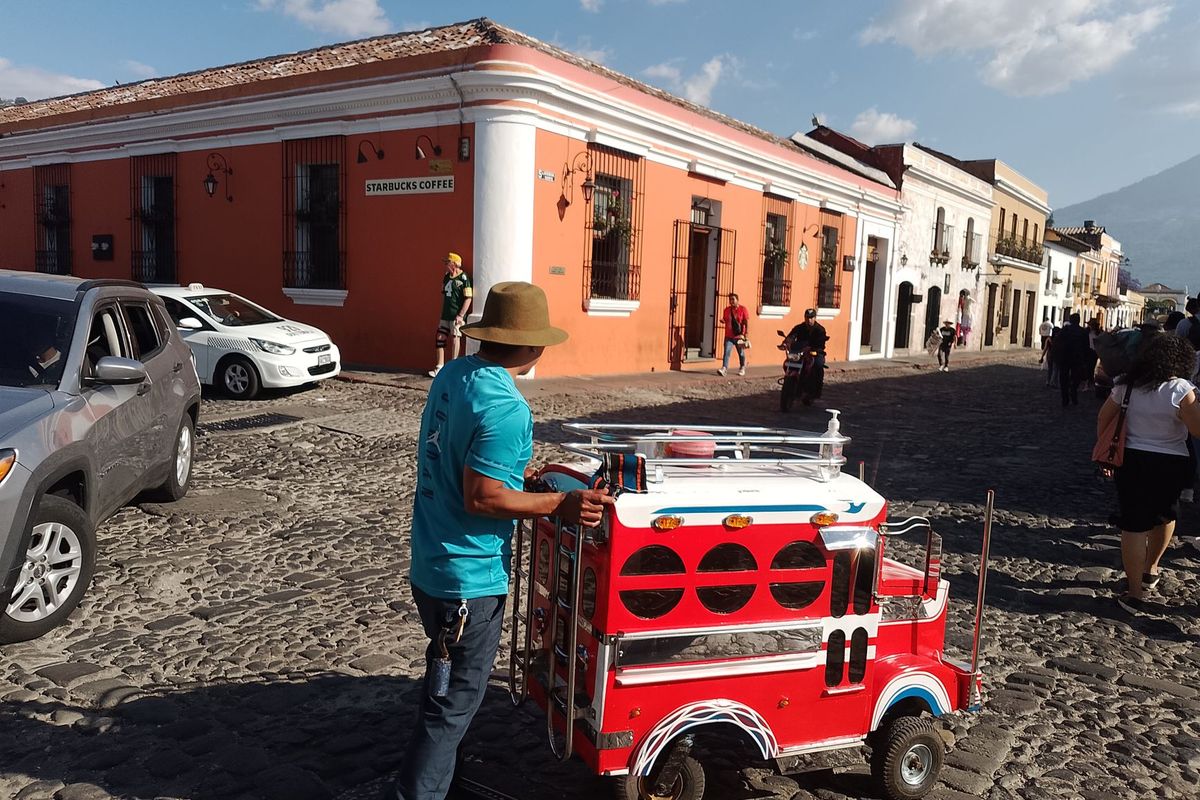
Three volcanoes, one colonial grid, and very good coffee.
The cobblestones are uneven enough to turn an ankle if you're looking at your phone instead of your feet, which is understandable because Volcán Agua sits at the end of nearly every street like someone placed it there deliberately. Antigua is a colonial city kept intact by earthquakes that destroyed it and a preservation law that keeps it that way: yellow and ochre facades, bougainvillea spilling over ruined convents, and a central park where shoe shiners and schoolchildren occupy the same benches.
Our honest take
Antigua punches above its size. The ruins, the volcanoes, the coffee, the language schools: it adds up to a place that earns its reputation. But it's also a small city that gets genuinely packed in high season, and the souvenir market off Parque Central has become a gauntlet. The Acatenango hike is brutal and worth it.
Why go
- Acatenango volcano overnight hike puts you at 3,976m watching Volcán Fuego erupt across the saddle, lava glowing red in the dark, every few minutes without fail
- Antigua has serious coffee culture rooted in actual proximity to the farms: tours through Finca Filadelfia take you from tree to cup in a few hours for around Q150 ($19)
- Semana Santa (Holy Week) turns the city into a procession of purple-robed penitents carrying floats the size of buses over hand-laid sawdust carpets. If you're anywhere near Guatemala in April, come.
Skip if you can
- Casa del Jade on 4a Calle: overpriced tourist jewellery shop dressed up as a museum, skip it entirely
- Budget volcano tours for Acatenango that skip the overnight. The eruptions happen at night. A day trip gets you a cold summit and no fire.
- The tuk-tuk rides between attractions within the city centre. Antigua's grid is 10 blocks across. Walk it.
Things to do
Where locals eat
Guatemala's national dish and one of its oldest: a deep, spiced stew of chicken or beef thickened with toasted seeds and chilies, closer to a savoury mole than a curry. Served with rice and tortillas.
Los Tres Tiempos, a traditional comida guatemalteca restaurant in Antigua
Antigua's volcanic-soil coffee is among the world's most prized. Drink it at source in a town café rather than buying the exported bags.
A specialty coffee café in town
Mashed plantain stuffed with sweetened black beans, fried, and dusted with sugar, a Guatemalan snack that sounds odd and works.
A market stall or traditional comedor
Regional Maya stews, jocón is a green herb-and-tomatillo chicken stew; kak'ik is a fiery Q'eqchi' turkey soup. Deeper local cooking beyond pepián.
A traditional Guatemalan restaurant
Costs
Per person, per day on the ground, lodging, food, local transport and activities. Excludes international flights (see Getting there).
Lunch at a comedor: Q40-60 ($5-8). Acatenango overnight tour: Q400-600 ($50-75). Ruins entry (La Recoleccion, Las Capuchinas): Q40-50 ($5-6) each. Coffee farm tour: Q120-180 ($15-23).
Getting there
Where to stay
Best location, noise from weekend crowds and bars, prices reflect it
Quieter, still walkable, mix of guesthouses and small hotels with volcano views
Local neighbourhood east of centre, significantly cheaper, 15-minute walk in
Good to know
- Petty theft is common, especially phones grabbed on cobblestone streets. Keep valuables in front pockets and avoid looking at your phone while walking.
- Walking outside the central grid after dark is not advisable alone. Tuk-tuks at night are cheap and worth it.
- The cobblestones are genuinely treacherous when wet. Wear shoes with grip.
- Altitude is 1,530m. Take it easy the first day if you're coming from sea level, especially before the Acatenango hike.
Prices, visa rules, and transport details may change. Always verify with official sources before booking. Last updated: July 2026.
Reviews
No reviews yet
Visited Antigua Guatemala? Be the first to share your experience.