Siem Reap
Cambodia, Asia
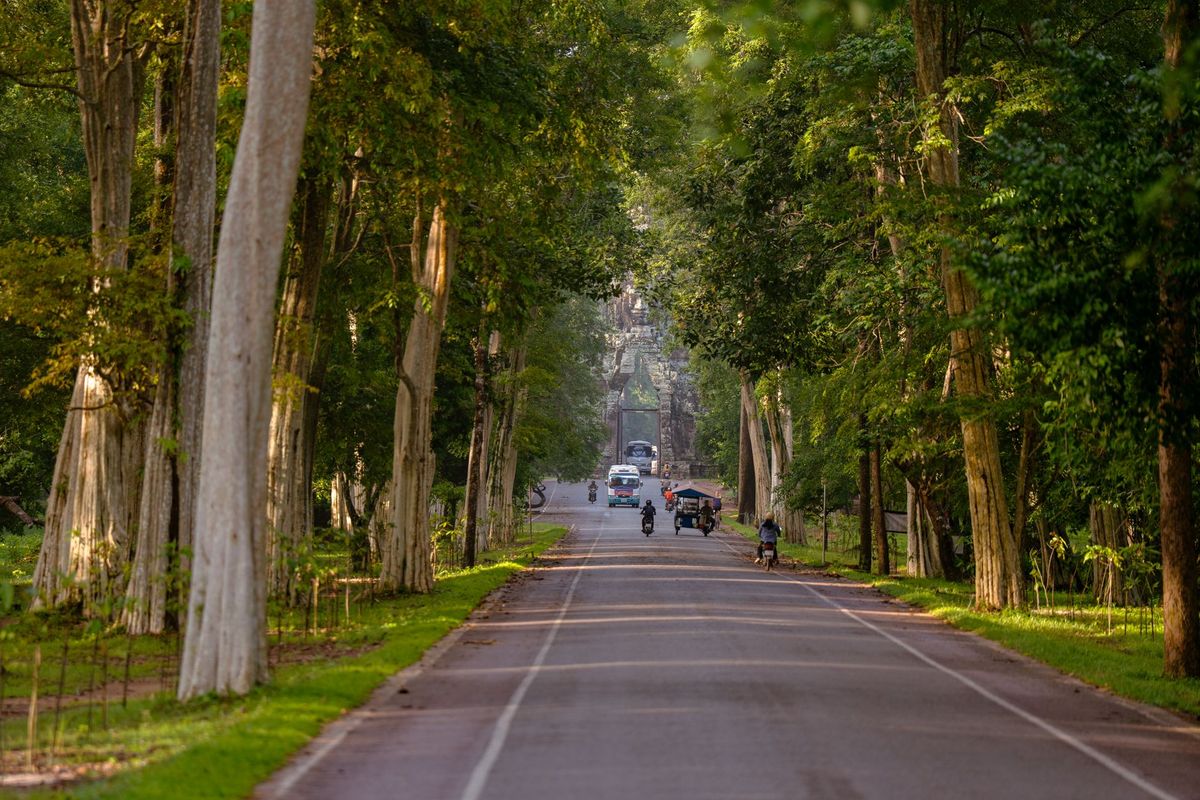
A thousand years of stone, one sunrise that justifies the alarm.
At 5am, tuk-tuk engines idle outside guesthouse gates while guides check their phones and tourists pull on long sleeves in the dark. Angkor Wat's silhouette comes before the sunrise, a reflection rippling in the moat, then the sky turns pink and several hundred people collectively go quiet. The rest of Siem Reap is a chaotic grid of temples, tourist bars, massage shops, and excellent cheap food.
Our honest take
Angkor is one of the most impressive archaeological sites on the planet and worth every sweaty hour. But three temple days is the limit for most people before the stone faces blur together. Pub Street is loud, overpriced, and aggressively aimed at backpackers. Eat away from it.
Why go
- Angkor Wat at sunrise is the real thing: the reflection in the reservoir, the scale of the causeway, the towers turning gold. It earns its reputation.
- Bayon temple's 216 stone faces are quietly surreal, especially in morning light when most crowds have moved on to Angkor Wat.
- Ta Prohm lets strangler figs split ancient stone walls in real time. The roots are genuinely swallowing the buildings.
Skip if you can
- Pub Street for dinner: Chang beer in a bucket and fried rice for twice the price of better food two blocks away.
- One-day Angkor passes: too rushed, and the $37 goes further as a three-day pass ($62) anyway.
- The floating village tours on Tonle Sap from most operators: exploitative, scripted, and money rarely reaches the community. Research operators with community ties before booking.
Things to do
Where locals eat
Cambodia's signature coconut-fish curry mousse steamed in banana leaf, Siem Reap is one of the best places to eat it well.
Cuisine Wat Damnak (Asia's 50 Best, Michelin Bib Gourmand) for an elevated version, or Malis for a classic one, both off Pub Street
A coconut curry with chicken or beef, sweet potato, and green beans, less fiery than Thai versions, eaten with bread or rice.
A local Khmer kitchen
The Khmer noodle breakfast served from market stalls, Psar Leu is a working local market rather than a tourist one.
Psar Leu (a local market), morning
Freshwater fish from the Tonlé Sap grilled whole, and marinated meat skewers, cheap evening street eating.
A night-market food stall
Costs
Per person, per day on the ground, lodging, food, local transport and activities. Excludes international flights (see Getting there).
Angkor pass: 1-day $37, 3-day $62, 7-day $72. Amok or lok lak at local restaurant: $3-5. Tuk-tuk day hire: $15-20. Beers at local bar: $1-2.
Getting there
Where to stay
Central, loud at night, walking distance to restaurants and temples, high guesthouse density
Quieter streets, boutique hotels, good cafes, 10min tuk-tuk to temples
Closer to temple gate, tranquil, mostly mid-range and upmarket resorts with pools
Good to know
- Unexploded ordnance still exists in rural areas outside the main temple complex. Stay on marked paths.
- Respect temple dress codes strictly: knees and shoulders covered, enforced at Angkor Wat and many sites.
- Cambodia runs almost entirely on USD. ATMs dispense dollars. Keep small bills for tuk-tuks and markets.
- Heat is serious from April to June. Carry water on temple days, early morning starts are not optional in hot season.
Prices, visa rules, and transport details may change. Always verify with official sources before booking. Last updated: July 2026.
Reviews
No reviews yet
Visited Siem Reap? Be the first to share your experience.