Bhutan
Bhutan, Asia
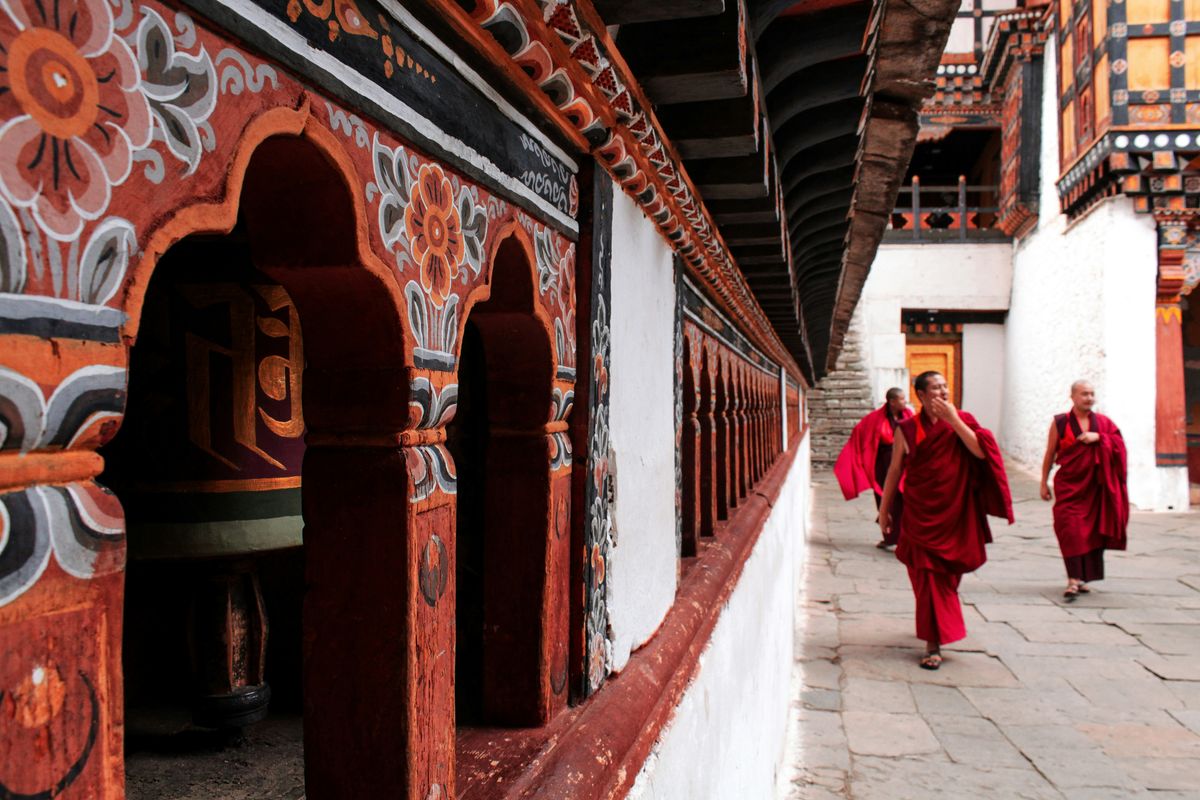
A country that charges you to slow down on purpose.
The prayer flags arrive first, hundreds of them strung across mountain passes, snapping in thin air at 3,000 metres. Bhutan smells like pine resin and incense, and its towns look like someone decided architecture should be mandatory art. There are no traffic lights in the country. Monks outnumber tourists on most days, and the government has structured things to keep it that way.
Our honest take
Bhutan is genuinely unlike anywhere else, no billboards, forest coverage mandated by law, architecture codes that mean every building looks like a dzong. The mandatory daily fee ($100/day 2025 rate) keeps crowds thin. The downside: you are locked into a guided tour format, which kills spontaneity. Worth it if you surrender to the structure.
Why go
- Tiger's Nest clings to a cliff face 900 metres above the Paro valley floor, the 4-hour hike up earns the view, and the monastery inside is genuinely ancient and active
- Punakha Dzong sits at the confluence of two rivers and was the country's capital until 1955, monks live and work inside, and the courtyards are open to respectful visitors
- The country's development philosophy, measuring Gross National Happiness instead of GDP, is visible in the landscape: 72% forest cover, rivers that run clear, towns that feel human-scaled
Skip if you can
- Rushing Tiger's Nest in 2 hours, the trail has an upper cafeteria where you can sit with tea and look at the monastery from across the valley; skipping it to save time misses the whole point
- Thimphu's Weekend Market if you only have one day there, the crafts stalls are full of Chinese-made goods; the fresh produce section and dried chilli vendors are worth your time, the souvenir aisles are not
- Booking the cheapest possible tour operator, guides vary enormously in knowledge; a bad guide in Bhutan means you walk past a 17th-century temple and get a shrug
Things to do
Where locals eat
Bhutan's national dish: chilli peppers (treated as a vegetable, not just a spice) stewed with local cheese. Genuinely fiery, the mild version is 'kewa datshi' with potato.
Babesa Village Restaurant in Thimphu, traditional Bhutanese cooking in a restored 200-year-old rammed-earth house
Nutty, pinkish highland rice grown in Bhutan's valleys, the everyday accompaniment to datshi dishes.
Any Bhutanese meal
Pork belly stewed with dried chillies and radish, a hearty Bhutanese meat dish.
A traditional restaurant in Thimphu or Paro
Butter tea served with roasted rice (zaw), the customary Bhutanese welcome.
A guesthouse or farmhouse visit
Costs
Per person, per day on the ground, lodging, food, local transport and activities. Excludes international flights (see Getting there).
SDF: $100/day mandatory. Tiger's Nest hike: included in most packages. Ara (local spirit): 50-100 BTN ($0.60-1.20). International flights to Paro can be expensive, book 3+ months out.
Getting there
Where to stay
Close to Tiger's Nest, quieter than Thimphu, rice paddy views, most international-standard hotels
Capital city, walkable, market access, slightly urban feel by Bhutanese standards
Lower altitude, warmer, dramatic dzong setting, fewer accommodation options but more peaceful
Good to know
- Altitude affects some visitors in Paro (2,280m) and mountain passes (3,988m at Dochula), acclimatise before major hikes
- Dress conservatively for dzong and monastery visits, full leg and arm coverage required
- Photography inside temples and dzong interiors is generally prohibited, ask your guide each time
- Medical facilities are limited outside Thimphu, travel insurance with evacuation cover is non-negotiable
Prices, visa rules, and transport details may change. Always verify with official sources before booking. Last updated: July 2026.