Uluru
Australia, Oceania
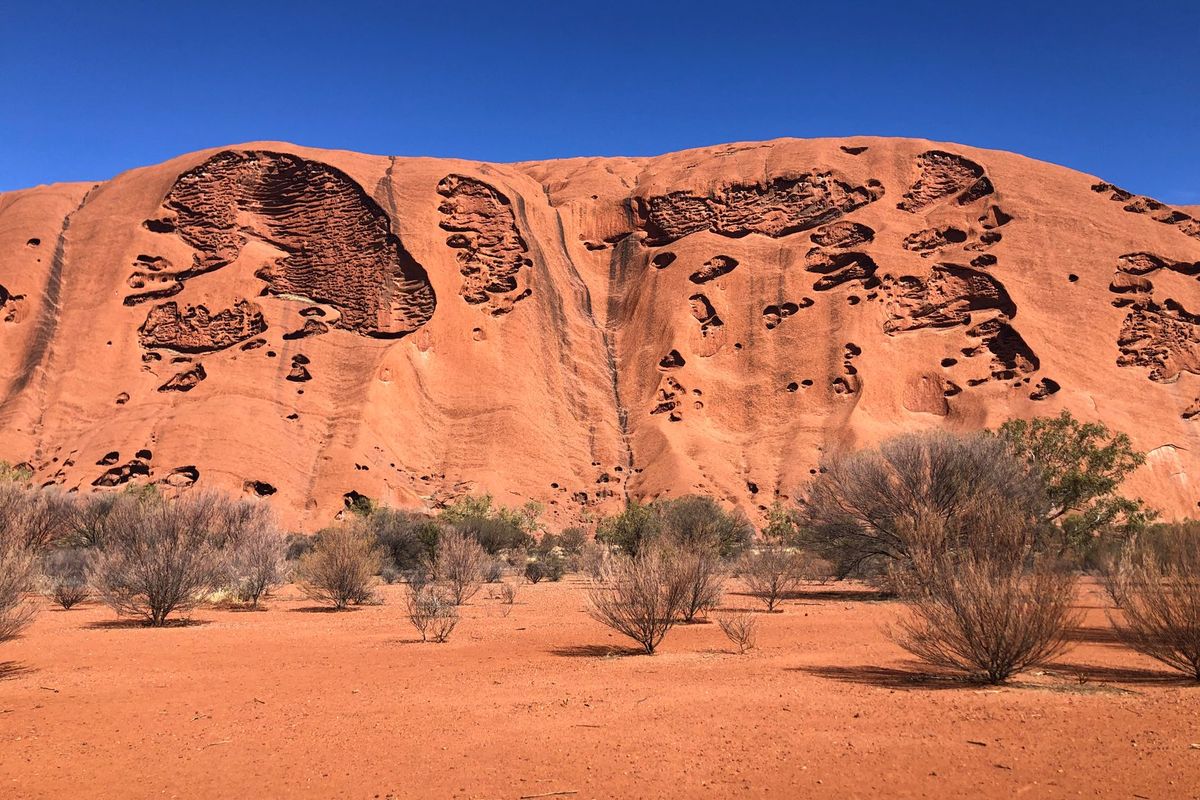
The centre of a continent, standing alone in the red dirt.
The rock changes colour as the sun drops, moving through orange into deep red into something close to purple before the light disappears entirely. Nothing about standing in front of Uluru feels like looking at a rock. It rises 348 metres from completely flat desert scrub with the logic of a dream object, outsized and ancient, and the silence around it at dawn is the kind that asks you to stop talking.
Our honest take
Two to three days is the right amount of time. One sunrise, one sunset, the base walk, and a morning at Kata Tjuta covers everything. Longer gets repetitive. The remoteness and the scale of the place do something to you if you slow down enough to let it. The heat in summer will end you.
Why go
- The base walk circles the full 10.6km perimeter of Uluru at ground level, where you see waterholes, cave paintings, and rock faces that don't appear in any photograph
- Valley of the Winds at Kata Tjuta in the morning light: domed red rocks arranged in a way that makes the Uluru plain look small, which takes some doing
- Anangu-guided tours give the site context that standing there alone doesn't. The Tjukurpa creation stories make the landscape read differently afterward
Skip if you can
- Climbing Uluru: the climb has been permanently closed since 2019 out of respect for Anangu traditional law. Operators still occasionally get asked. The answer is no.
- Driving in from Alice Springs on a day trip. It's 450km each way and you'll see nothing properly. Fly or stay overnight.
- Helicopter scenic flights: noisy, expensive at $180-250 AUD for 15 minutes, and they disturb the quiet that makes the place what it is
Things to do
Costs
Per person, per day on the ground, lodging, food, local transport and activities. Excludes international flights (see Getting there).
Park entry: AUD $38 per person for 3 days. Hotel meals: AUD $25-45 per dish. Guided cultural walk: AUD $120-150. Camel tour: AUD $130-160.
Getting there
Where to stay
The only accommodation within the park area, convenient but expensive and monopoly-priced
Self-catering option in the same resort precinct, slightly better value for families or longer stays
Basic but functional, powered and unpowered sites, the budget option, shared facilities
Good to know
- Summer temperatures (November to March) regularly exceed 45C and have killed unprepared visitors. Walks are closed automatically above 36C.
- Carry at least 2 litres of water per person per hour of walking. The desert air is dry enough that you don't notice how much you're sweating.
- Flies are relentless from September onward. A fly net for your hat is not a joke item.
- Fuel up in Yulara before any desert driving. The next petrol station in any direction is hundreds of kilometres away.
Prices, visa rules, and transport details may change. Always verify with official sources before booking. Last updated: July 2026.